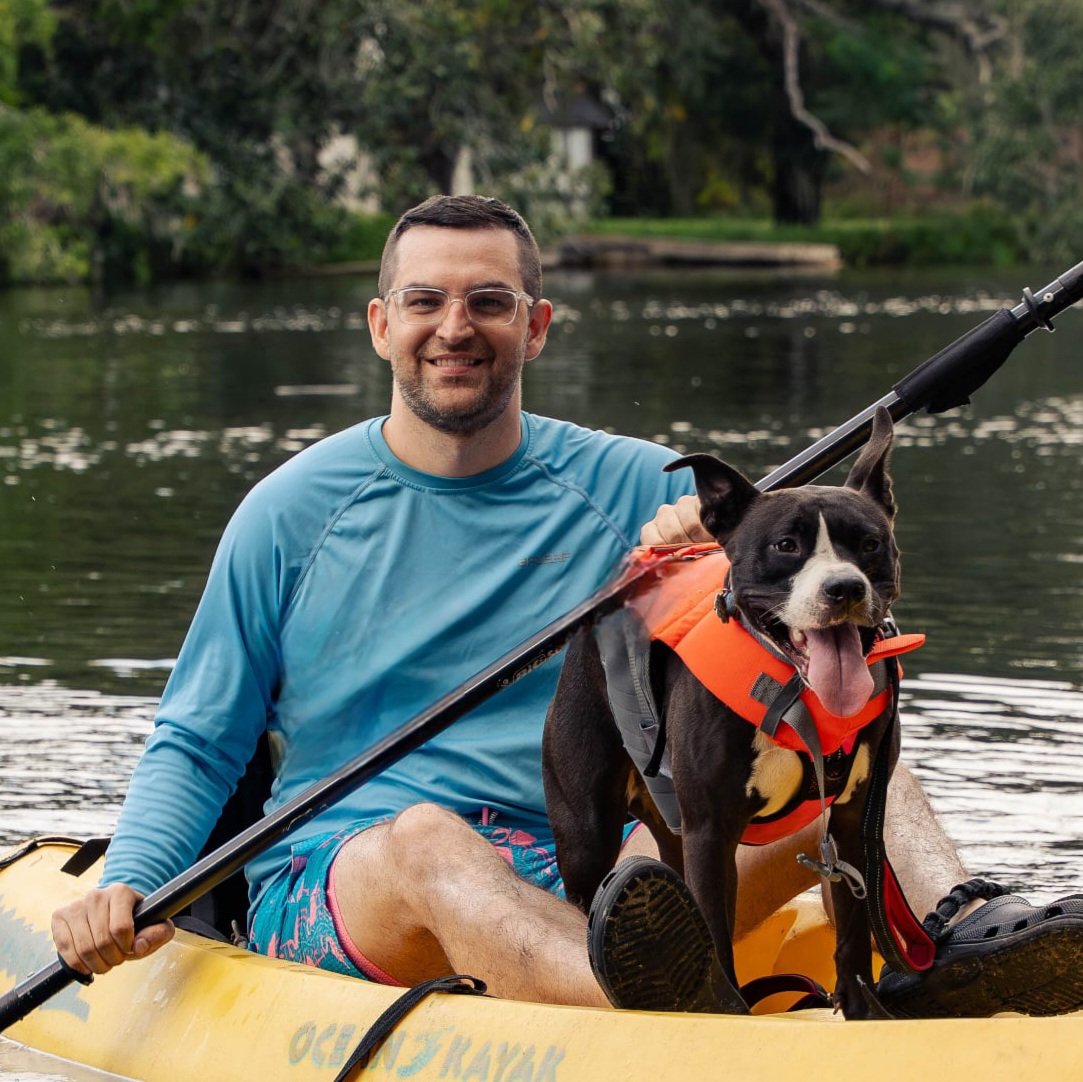
I grew up in the cultural bastion that is suburban Tampa, Florida. Before therapy, I studied magazine journalism, taught English in China on a U.S. Department of State program, and was an extra in more than a few movies. I taught myself how to surf and know an unreasonable amount about the Orlando Magic. The library is my natural habitat.
I've always been the kind of person who wants to understand how things work, especially people. That's what led me to become a therapist.
Before becoming a therapist, I studied Applied Linguistics and worked as a journalist. The linguistics background means I pay close attention to language: what people say, what they leave out, how the same situation gets described a dozen different ways. Journalism taught me how to ask questions that actually get somewhere interesting.
I also have ADHD myself. That's part of why I work the way I do. I know what actually helps versus what just sounds good, and I like sharing what's worked for me and for clients.
Outside of work I read more nonfiction than is probably healthy, watch a lot of arthouse and documentary film, and listen to a lot of indie rock. I have the sweetest pit bull. I practice Buddhism, or try to.
A few things I'm into right now:
Music: Gorillaz, The Mountain
Movie: Sentimental Value (should have won the Oscar)
Book: Stupid TV, Be More Funny: The Golden Era of The Simpsons one
More about me
More about my approach (what do those letters mean?)
Person-Centered Therapy (PCT) Basically: people change when they're listened to without an agenda by someone who actually means it. So I'm not here to lecture you or play expert on your life. I bring genuine curiosity, real attention, and the willingness to push back when it helps. The relationship itself is where a lot of the work happens, especially early on, before any specific technique gets traction.
Cognitive Behavioral Therapy (CBT) I help clients notice the thought patterns and habits that keep them stuck. Not to argue with the thoughts, but to see them clearly enough that they have less pull. From there we build practical skills for the real-world situations where those patterns show up.
Acceptance and Commitment Therapy (ACT) The core idea: you don't have to feel ready to do something hard. You can do it while feeling uncomfortable or anxious. A lot of the work is getting better at moving forward with difficult thoughts and feelings, instead of waiting for them to clear up first.
Commonly recommended books
Top of the stack
The Power of Bad Why negative experiences are remembered stronger than positive ones, and what to do about it.
On ADHD and focus
On attention and the modern condition
On the people you came from
On being an introvert
On autism and neurodivergence
On the mental health system
*Bonus* dog book
The Other End of the Leash - dog psychology!